Ephemera
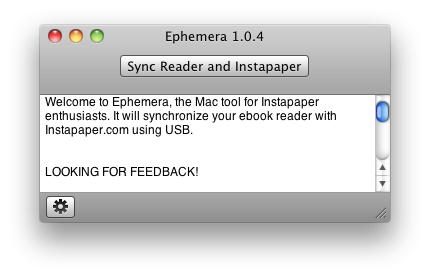
Two-way Instapaper.com sync for your ebook reader.
How Much Is OpenAI Worth? Valuation Drivers and Market Context
When you look at OpenAI's recent trajectory, it's clear the company's value has soared well beyond its humble beginnings. You see headlines pointing to a $500 billion valuation, but what’s really fueling this meteoric rise? Is it just hype or solid fundamentals driving this AI pioneer? Before you decide if OpenAI truly deserves such a premium, you’ll want to understand the key forces shaping its market standing.
OpenAI’s Valuation Surge: From Startup to $500 Billion
OpenAI has experienced significant growth in its valuation, increasing from $1 billion in 2019 to approximately $500 billion by October 2025.
As a private company, OpenAI's market capitalization is comparable to that of many established public firms, largely driven by increasing demand for artificial intelligence technologies.
As of 2023, OpenAI's revenue was reported at $1.6 billion, with forecasts suggesting an annual run rate nearing $20 billion.
Key factors contributing to this growth include substantial investments from Microsoft and the incorporation of advanced language models into various applications.
The trajectory of OpenAI's valuation represents a notable development within the technology sector and the broader AI market.
Key Factors Powering OpenAI’s Market Value
OpenAI's increasing market value can be attributed to several key factors grounded in its operational performance and strategic initiatives. A significant element is its projected revenue growth, which estimates a run rate of $20 billion by the end of 2025, bolstered by $4.3 billion already booked in early 2025. This growth underscores the organization's successful monetization strategies in the AI sector.
As the most valuable private company, OpenAI's recent funding rounds and secondary share sales point to strong market interest and demand.
Additionally, substantial investments in AI infrastructure, such as the $300 billion commitment from Oracle Cloud, play a crucial role in expanding OpenAI's capabilities in generative AI. These investments not only enhance its operational capacity but also contribute to broadening its influence within the global technology ecosystem, which is increasingly reliant on advanced AI solutions.
The Role of Strategic Investors and Partnerships
As significant investments in artificial intelligence continue, strategic partnerships have become critical in influencing OpenAI’s development and market valuation. Microsoft's substantial investment in OpenAI not only provides necessary funding but also integrates OpenAI’s technologies into Microsoft’s suite of products, enhancing both organizations' market reach.
Additionally, investments from firms like SoftBank, alongside various high-profile secondary sales, reflect a broader confidence in OpenAI's potential for future growth.
Furthermore, the establishment of diversified partnerships has reduced OpenAI's reliance on Microsoft, which contributes to a more competitive landscape and strengthens OpenAI’s market position.
Important agreements, such as Oracle's $300 billion commitment, provide essential infrastructure support, facilitating scalability and enabling OpenAI to explore new revenue opportunities.
This alignment of strategic partnerships and infrastructure investments is likely to play a significant role in OpenAI's ongoing evolution and valuation in the AI sector.
AI Industry Trends Shaping OpenAI’s Trajectory
OpenAI's valuation has seen significant growth, with the company currently valued at approximately $500 billion. This surge can be attributed to an influx of investment into the AI industry, which has seen 19 firms collectively raise around $65 billion in 2025. OpenAI is positioned as the leading private company within this sector, bolstered by strong investor confidence and revenue projections that approach $20 billion.
However, maintaining market dominance may prove challenging due to competition from other organizations such as Anthropic and Google DeepMind, which continue to drive innovation in AI. Additionally, key investors, particularly Microsoft, are influential in shaping OpenAI's strategic direction as the company prepares for a potential initial public offering (IPO).
The current environment of heightened interest in AI is likely to impact the trajectory of OpenAI and the industry as a whole, underscoring the complexities and dynamics of this rapidly evolving market.
Challenges and Risks in Sustaining OpenAI’s Premium Valuation
While investors have expressed considerable interest in OpenAI's prospects, various challenges could impact its valuation. Regulatory hurdles pose a significant risk, as scrutiny from government entities could affect operations and growth. Additionally, OpenAI faces strong competition from large technology firms such as Google, Amazon, and Meta, which may limit its market share and revenue growth potential.
The company's capped-profit model, coupled with Microsoft's involvement, introduces governance concerns that could affect investor confidence, especially as OpenAI approaches its initial public offering (IPO).
Moreover, talent retention remains a critical issue, as noted by reports of engineers leaving for rival organizations, which could hinder the company’s capacity for innovation and development.
OpenAI's financial situation is concerning, marked by a high rate of cash burn and the necessity for ongoing infrastructure investments. These factors contribute to immediate revenue and operational risks that may challenge the company's ability to maintain its elevated valuation.
Conclusion
You’ve seen how OpenAI skyrocketed from a startup to a $500 billion powerhouse, thanks to booming AI demand, innovative monetization, and strong partnerships with giants like Microsoft. But remember, the future isn’t set in stone. Fierce competition and changing regulations could shake things up fast. If you’re watching OpenAI, stay alert—their success shows incredible potential, but in the rapidly evolving AI world, today's leaders must constantly adapt to hold onto that premium valuation.